Navigating the Holidays

Trigger Warning: Eating Disorders

The holidays can be stressful for someone who is struggling with an eating disorder. We get it. A lot happens this time of year—extra family time, busy schedules, social gatherings—and most of it centers on food.

To help you prepare for the upcoming holidays, our staff has come up with some tips and words of encouragement. Add any or all of them to your recovery tool box for Thanksgiving and other upcoming holiday events.

  • Continue doing what works for you despite the fact that your schedule may change, stress may increase, and time may be short.
  • Remember: it’s progress, not perfection.
  • Have a plan for food and skills to use during the day.
  • Keep practicing self-care by feeding yourself, getting enough water, moving when/if/how it makes sense for your body, resting when you need to, and connecting with others.
  • All foods fit, and your body knows how to use them.
  • Allow yourself to ask for more support from others you trust, whether that be family, friends, or treatment team members.
  • Remember that although it may seem like everyone is sharing happy memories with their loved ones, not everyone is and it’s okay since that is often real life. Stay away from social media if it allows you to have a more realistic picture of the world.
  • Consider what would make you enjoy the holiday season more, whether that be doing something traditional, such as baking or going to church, or something less traditional, such as getting a pedicure or volunteering. Make the holiday season your season, not something that you think it should be.

Wishing you all a happy holiday season!

Holiday Drinking: What Is Normal?

Holiday Drinking

I recently read an interesting article about a Caron Treatment Centers study titled “Many Americans Oblivious to What High-Risk Drinking Looks Like.” Dr. Harris Stratyner was quoted as saying “Alcohol is still the number one cause of damaging behavior at holiday celebrations throughout the U.S”. The information in this article got me thinking… are the holidays a time and excuse for people to abuse alcohol and what are the consequences? The Caron Treatment Centers study found that even non-alcoholics are over-imbibing at these events and experiencing many negative effects such as:


  • 50% saw a co-worker/supervisor share inappropriate personal details about themselves or other colleagues
  • 45% saw a co-worker/supervisor flirting with another colleague
  • 43% saw a co-worker/supervisor drive even though he or she was drunk
  • 35% saw a co-worker/supervisor using excessive profanity
  • 30% saw a co-worker/supervisor argue, be abusive or engage in sexual activity
  • 60% of those who attend family holiday parties also reported that a family member behaved inappropriately after drinking too much alcohol. One respondent shared that alcohol prompted “a knock out drag out fist fight” and another spoke of “emotionally abusive behavior” during a family holiday party. Others said relatives wanted to drive even though they were drunk

I don’t want to be a “buzz kill” but my question is, are we having fun yet?  In Pete Hamill’s book A Drinking Life his final drink before getting sober was at a New Year’s Eve party—and he writes: “But once more, I felt as if I were shooting the scene with a camera from across the bar…It was New Year’s Eve. We were supposed to be having a good time.  Look: there were balloons. There were funny hats. There were noise makers. Charlie, bring me a vodka and tonic, will you please?…I stared into my glass, at the melting ice and vodka-logged lime. And I said to myself, I am never going to do this again.  I finished my drink. It was the last one I ever had.” Hamill took a moment to step back from the festive scene, observed the drunken and insincere behavior and concluded that it felt meaningless.  Alcohol is such an integral part of holiday events and this can be a challenge particularly for those who are sober and especially for those in early sobriety.

According to the National Institute on Alcohol Abuse and Alcoholism (NIAAA) low-risk drinking is defined as no more than four drinks per sitting and not more than 14 per week for men and no more than three drinks per sitting and no more than 7 per week for women.

The holidays are notoriously an emotionally “loaded” time for many people as well as a joyous time.  They can be especially challenging for those who are sober or choosing not to drink.  However, it is possible to be truly present for these holiday events without drinking or abusing alcohol by learning coping skills to tolerate or set limits with more challenging work and social engagements:

• Have an escape plan by bringing your own vehicle or figure out the available public transportation near the holiday event that will enable you to leave if you are feeling tempted to drink or uncomfortable.
• Ask another sober person to be “on call” for you to check in with during the event for additional support.
• Let someone whom you trust at the holiday event know that you may need additional support during this occasion or time of year.
• Find a tasty non-alcoholic beverage you can drink that will give you something to hold and may prevent people from offering you an alcoholic drink.
• Come up with a standard response as to why you are not drinking that may vary depending on the type of holiday event and if you want those in attendance to know you are sober: “I don’t drink anymore,” “I am not drinking tonight,” “I am on medication and cannot have alcohol,” “I am the designated driver tonight,” etc.
• Be choosy about the holiday events that you attend and avoid “people pleasing” by saying “yes” to events that you don’t need to nor don’t want to be at.
• Take care of yourself prior to these events: get enough sleep, eat regularly, exercise, relax, meditate, etc.
• Find new holiday activities and traditions that you may never have tried in the past which do not involve drinking alcohol (volunteer at a soup kitchen, go ice skating, have a sober get-together and gift exchange, see a movie, take a trip, etc.)
• Remember to create structure for yourself if you have time off (volunteer, exercise, make plans, got to mutual-help group meetings, therapy, etc.).
• Work extra hours if needed in order to distract yourself.
• Learn to say “no” if you do not want to attend an event.
• Put your sobriety first and realize that others may not understand what this entails, but that it is your number one priority.
• “Just say no” to rum cake!
• Attend extra mutual-help group meetings during this season (i.e., A.A. has “alcathons” that involve 24 hours of meetings, food, socializing at designated locations on Thanksgiving Eve, Thanksgiving, Christmas Eve, Christmas, New Year’s Eve and New Year’s Day. Contact your local A.A. Intergroup for more information.
• Be honest with loved ones if you are having a hard time and let them know how to support you.
• Remember that “this too shall pass” and there is life after the holidays.
• No matter how you are feeling, you do not have to drink!

For more resources and information about high-functioning alcoholics, visit www.highfunctioningalcoholic.com

By Sarah A Benton MS, LMHC, LPC

https://www.psychologytoday.com/blog/the-high-functioning-alcoholic/201311/holiday-drinking-what-is-normal

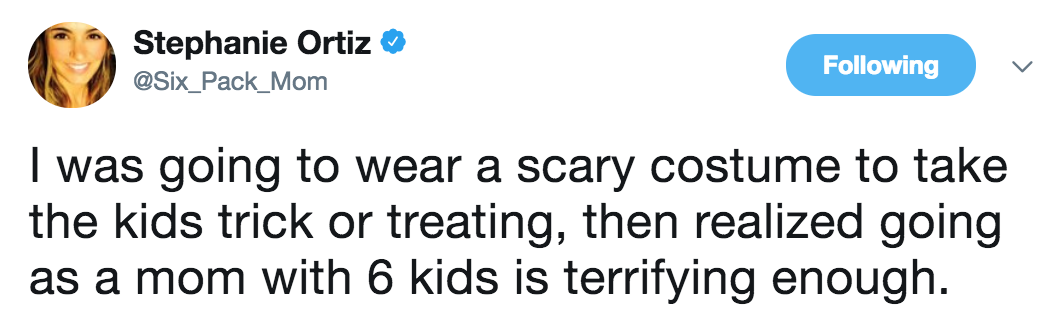
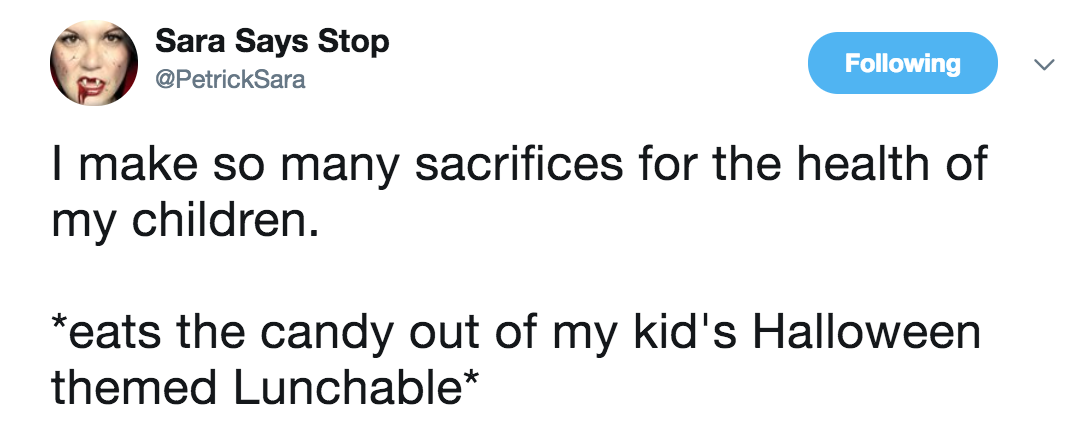
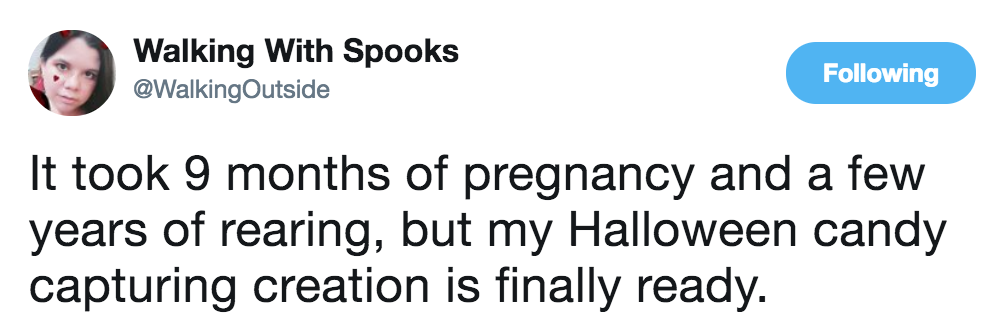
14 Tweets From Parents About Halloween That Will Make You Laugh Your Butt Off

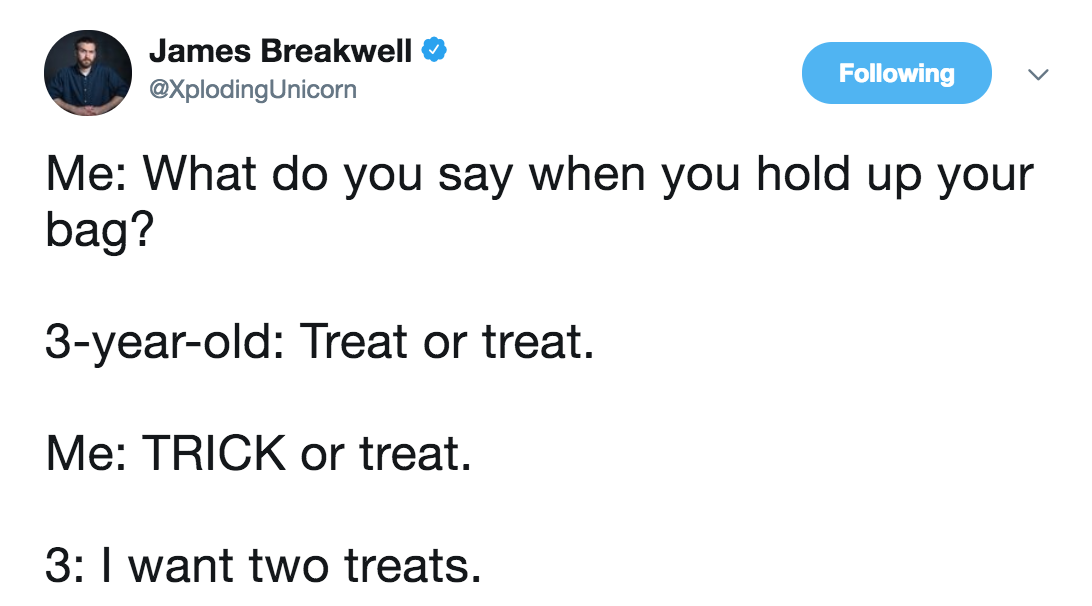
“Treat or Treat!!”

1.

By Krista Torres 

Go Take A Hike (And Get Some Vitamin D)

Do you ever feel less energized, motivated or happy during the winter months? If you do, you aren’t the only one. Many people’s moods and feelings are affected by the amount of sunshine and vitamin D they receive. “Some studies suggest an association between low vitamin D levels in the blood and various mood disorders, including depression, seasonal affective disorder (SAD), and premenstrual syndrome (PMS)” says Mayo Clinic.

There are over three million cases per year of seasonal affective disorder (SAD), which is a mood disorder that occurs around the same time every year. SAD most often occurs during the fall and winter, but it can also occur during the spring and summer.

SAD can cause people to feel moody, gain weight, crave carbohydrates, lack focus and feel more tired even if they are sleeping more. Even if you don’t meet the qualifications of being officially diagnosed, getting enough sunlight is still important to your overall mood.

In previous years, I would always notice these types of symptoms begin to flare as fall turned to winter. In order to prevent my normal winter blues, I began to go for walks or runs around my neighborhood for 30 minutes a few times each week. I even went for walks when it was snowing, so that I didn’t remain inside for too long.

Since I started doing this, I began to not notice the drop in mood, focus and energy that I had been associating with winter for years. Not only that, but I also felt better overall. Below are some of the other health benefits to spending time outside even when it’s cold:

Less Stress and Anxiety

There is something innately relaxing —for most people—about spending time in the great outdoors. It gives you the chance to bring yourself into the present, sending your anxious thoughts out of your mind for a little while.  Taking time to clear your head has lasting effects on your overall stress and anxiety levels. Also, studies have shown that certain scents within nature, such as jasmine, pine and lilacs have been shown to reduce stress and anxiety.

Stronger immune system

Vitamin D is a critical nutrient to how our body maintains a healthy and strong immune system. The easiest way to get this vital nutrient is by spending time soaking in the sun.

When we are breathing fresh air amongst plants and trees, we are also breathing in phytoncides. These are airborne chemicals that plants give off to protect themselves. This natural chemical contains qualities that are meant to help fight off disease.

More Energy

Spending a lot of time inside can alter our circadian rhythms and throw off our sleep schedule. Being exposed to sunlight in the morning helps recalibrate these cycles, so that we sleep better at night and feel more energized during the day.

Improved Focus

The urban environments we are accustomed to constantly drain our attention spans. Between cell phones, traffic jams, crowding and noise, are brains need a break every once in a while. “Using too much directed attention can lead to what they call “directed attention fatigue” and the impulsivity, distractibility and irritability that accompany it. The inherent fascination of nature can help people recover from this state” research from the American Psychological Association shows. Spending time focusing on the nature that surrounds us allows our brains to rest, which in turn helps us to focus better later.

If you are worried about being cold, dress the way you would if you were a kid on a snow day: wear layers, gloves, a scarf, a hat, etc. Or do a form of exercise that will get your blood pumping and warm you up. You can also bring a hot beverage along with you for your activity. Especially on a sunny day, preparing for the cold can be manageable.

Looking for ideas to get started? Here are my 10 favorite things to do outside:

  1. Walk around a lake or park
  2. Find a cozy spot outside to read
  3. Eat lunch outside
  4. Play Frisbee with a friend
  5. Go for a run around my neighborhood
  6. Hike a trail
  7. Ice skate at the outdoor rink
  8. Borrow (and make sure to return!) a friend’s dog and go to a dog park
  9. Get a group together to play capture the flag (or any other game)
  10. Go on a ski trip!

Whoever this anonymous person is, he or she got it right: “I’ve never found time spent amongst nature to be a waste of time.”

By Laura Greenstein

https://www.nami.org/Blogs/NAMI-Blog/December-2015/Go-Take-a-Hike-(and-Get-Some-Vitamin-D)

“All The Bright Places” Shines A Light On Love & Loss

Trigger Warning: Sucide

“‘Oh, there he goes again, in one of his moods. Moody Finch. Angry Finch. Unpredictable Finch. Crazy Finch.’ But I’m not a compilation of symptoms. Not a casualty of bad parents and an even worse chemical makeup. Not a problem. Not a diagnosis. Not an illness. Not something to be rescued. I’m a person.”

This passage is from the insightful young adult novel All the Bright Places, which brings together two teenagers experiencing the hardships of mental illness, suicidal thinking and grief. This is author Jennifer Niven’s first young adult novel; in it, she uses her personal experience as a survivor of suicide to spread awareness about what it’s like to live with mental illness.

Using relatable characters, she paints a beautiful story of love and loss. Niven’s main character Theodore Finch asks himself, “Is today a good day to die?”—introducing suicide, the main theme of the book, in the very first line—as he stands on the ledge of a bell tower at his high school. Niven then introduces Violet Markey, who also finds herself on top of the looming bell tower, though she doesn’t fully understand how she got there. And so begins Finch and Violet’s ominous love story.

Throughout the book, Niven emphasizes how someone going through mental health challenges can believe that suicide is a reasonable solution to their condition. Finch regularly considers all the different ways he could end his life, logging them with a list of pros and cons. Finch’s ideations are revealed mainly to the reader, but occasionally to other characters.

Readers can see that what Finch is going through is bipolar disorder even though “depression” and “mania” are never mentioned, and he doesn’t receive his diagnosis until well into the book. Instead, Niven uses terms like “Awake,” “Long Drop” and “Asleep” to describe the cycles of his mood. As his “Long Drop” nears closer, tension builds around Finch’s frame of mind. But while he considers ending his life, he simultaneously teaches the grief-stricken Violet how to live hers.

Violet never receives any diagnosis throughout the book, but it is implied that she may be experiencing Post Traumatic Stress Disorder (PTSD) after being in a car accident that killed her older sister. She stops trying in almost every aspect of her life and isolates herself from people she used to spend time with. She refuses to be in a moving car, has consistent nightmares and can’t get herself to write—a once-favorite activity she used to share with her sister.

Finch encourages Violet to ride in a car again, to go to new places and write again. Without Finch, Violet may have taken years to fully live her life again. On the other hand, Finch’s condition only worsens with time, even as his love for Violet helps him experience “all the colors in full brightness.”

These two teenagers have more to grapple with than typical drama and nightly homework that plague everyone during the high school years. They have symptoms, stigma and the question of why life is worth living to contend with and Niven manages to showcase just how difficult mental illness is, especially during adolescence when mental health conditions often onset. The book concludes in a way that makes readers understand that when you live with mental illness, sometimes you have happy endings and sometimes you don’t.

Laura Greenstein is communications coordinator at NAMI.

https://www.nami.org/Blogs/NAMI-Blog/March-2017/-All-the-Bright-Places-Shines-a-Light-on-Love-L

You’ll Be Happier If You Let Yourself Feel Bad

There’s a moment in Oscar Wilde’s novel The Picture of Dorian Gray when the title character declares war on his feelings: “I don’t want to be at the mercy of my emotions,” Dorian says. “I want to use them, to enjoy them, and to dominate them.” Basil Hallward, the artist who had painted Dorian’s portrait, becomes fearful of his subject’s newfound aggression: “You talk as if you had no heart, no pity in you,” he says. But Dorian, in the throes of an existential crises, isn’t listening; he wants control, most especially over how he feels.

It’s not an uncommon desire. In fact, it may be a near-universal one. With varying levels of success, we try to hold on to good emotions and ward off the bad ones — but research suggests that those efforts, at least when it comes to negative feelings, may be misplaced.

For many, accepting our negative emotions appears counterproductive, especially because it gets in the way of what motivates us. Our negative emotions can act as catalysts and adrenaline boosts — nervousness in the face of a closing deadline, for instance, might help push you to finish your task on time. Often, though, people don’t use their negative emotions so productively; instead, many tend to get stuck in their negativity, spiraling downwards. It’s hard to accept your emotions — both positive and negative — and let them pass by. Dorian Gray certainly never could.

But studies have shown that the ability to embrace your negative feelings can provide a slew of benefits. Those who accept all their emotions without judgment tend to be less likely to ruminate on negativity, less likely to try to suppress mental experiences (which can backfire by amplifying these experiences), and less likely to experience negative “meta-emotional reactions,” like feeling upset about feeling upset. Or, as the authors of a recent study in the Journal of Personality and Social Psychology put it: “When people accept (versus judge) their mental experiences, those experiences run their natural — and relatively short-lived — course, rather than being exacerbated.”

This latest study, led by University of Toronto assistant psychology professor Brett Ford, explored the link between one’s acceptance of negativity and one’s well-being. The researchers first set out to discover if and how the acceptance of negativity benefits psychological health, and whether this kind of acceptance works for everyone across socioeconomic, gender, and racial divides. Around 1,000 study subjects filled out surveys about their mindfulness, life satisfaction, depressive symptoms, anxiety symptoms, and the number of stressful events they’d been through over the course of their lives.

Ford and her colleagues found that those who accepted their negative feelings were, on average, also more psychologically healthy. They also found that the factor most strongly linked to participants’ well-being wasn’t a low-stress life — rather, it was the capacity to accept life’s difficulties and one’s own negative feelings non-judgmentally.

On the face of it, this is a counterintuitive idea. A person with, say, no medical or financial issues — someone who should theoretically have low stress — ought to have greater well-being than a poorer, less healthy person who’s working 70 hours a week. And yet if the latter person is better at accepting the negative experiences that come with his objectively more difficult life, this study suggests, she may be happier than the person who has fewer stressors in life.

In order to further prove this apparent paradox, the researchers recruited 160 women, half of whom had experienced a life stressor “of at least moderate impact” within the past six months, to complete a neutral task (watching a movie clip) and then a stressful task (giving a three-minute video-recorded speech on their job qualifications in front of an audience). During both tasks, the women rated their own emotional experiences; once again, Ford found that the people who were more accepting of their negative mental states reported less intense negative feelings.

Finally, to test their findings with a more diverse set of participants, Ford and her colleagues had 222 men and women complete diary entries every night for two straight weeks, making note each night of the stressful events they’d experienced during the day. Some reported particularly high-stress moments, like receiving a phone call from a son in prison, while others had mostly mild stressors, like low-key arguments with a romantic partner. For each entry, participants also rated the extent to which they felt 12 negative emotions: sad, hopeless, lonely, distressed, angry, irritable, hostile, anxious, worried, nervous, ashamed, and guilty.

Once again, acceptance was associated with greater psychological health, but with an added layer of nuance: The correlations showed that accepting negative situations was not associated with increased psychological health. Rather, it was the acceptance of one’s state of mind that came from negative situations that best indicated psychological well-being.

Taken together, Ford says, the results across all three experiments “underscore the broad relevance of acceptance as a useful tool for many people.”

“The overall take-home message is that emotions are naturally short-lived experiences,” she says, and if we let them wash over us instead of trying to push them away, “these emotional experiences would actually pass relatively quickly.”

Still, opening your arms to all your negative feelings is easier said than done in a culture where happiness is considered a virtue. We tend to valorize the pursuit of positivity, while ignoring or dismissing the importance of a well-rounded emotional experience. Happiness, the thinking still often goes, is the absence of negativity rather than the acceptance of it. But the research says otherwise — you can’t always control your emotions, but you can control how you respond to them. Sometimes it’s best to let yourself feel okay about feeling bad.

By 

https://www.thecut.com/2017/08/youll-be-happier-if-you-let-yourself-feel-bad.html

Less Sunlight Means More Blues For Some

Global

Seasonal affective disorder (SAD) is a form of depression that recurs regularly at certain times of the year, usually beginning in late fall or winter and lasting into spring. While the reported incidence of SAD in the general population is four to 10 percent, some studies suggest that up to 20 percent of people in the United States may be affected by a mild form of the disorder. The disease was officially named in the early 1980s, but seasonal depression has been described as early as the days of Hippocrates.

The symptoms of SAD include depressed mood, loss of energy, increased sleep, anxiety, irritability and difficulty concentrating. Many also experience a change in appetite, particularly a craving for carbohydrates, which can lead to weight gain. Some people report a heavy feeling in their arms and legs.

Scientists believe SAD is caused by a biochemical change in the brain, triggered by shorter days and reduced sunlight during the winter. In particular, two chemicals in the brain, serotonin and melatonin, have been linked to changes in mood, energy, and sleep patterns. Low levels of serotonin are associated with depression. Serotonin production is activated by sunlight, so less sunlight in winter could lower serotonin levels, leading to depression. Melatonin regulates sleep and is produced in greater quantities in darkness. Higher melatonin levels could cause sleepiness and lethargy as the days get shorter. The combination of the changes in the levels of serotonin and melatonin could contribute to SAD.

There are various risk factors for the development of SAD. Females are up to four times more likely to be affected than males. Although SAD can affect children, it is reported mostly in people between the ages of 18 and 30, with incidences decreasing with age. Many have a family history of mental illness. Studies have shown that living farther away from the equator increases the occurrence of SAD. Those already experiencing clinical depression or bipolar disorder may see a worsening of their symptoms in winter.

Treatments for SAD include traditional psychotherapy and antidepressant medications. In addition, light therapy, a daily 30-minute exposure to a light box that simulates high-intensity sunlight, has shown promise in treating SAD.  Interestingly, the ancient Greeks knew about the power of sunlight. Back in the second century, the physician Aretaeus instructed, “Lethargics are to be laid in the light, and exposed to the rays of the sun for the disease is gloom.”

One theory suggests that SAD is an evolutionary adaptation in humans, similar to hibernation in animals. As food gets scarcer and the weather gets colder, animals adapt by storing fat and reducing caloric output. Applied to humans, this could explain the carbohydrate cravings, increased sleep and reduction in energy levels. It could also play a role in reproduction, where it is more beneficial for a female of childbearing age to conserve resources.

While these naturally occurring body changes may have helped our ancestors survive, depression in any form can be serious. Anyone affected by significant symptoms of depression should consult a physician.

Author: Hisaho Blair – 1/22/2013

The Importance Of Maintaining Mental Health In College

Did you know that colleges and universities are more aware of college students’ mental health needs now than ever before? Thanks to current research findings, they are doing a much better job understanding the link between mental health and academic success.

The American College Health Association informs colleges (and all of us) that mental health needs are almost directly related to measures of academic success. Their 2015 survey found that students who reported psychological distress also reported receiving lower grades on exams or important projects; receiving lower grades in courses; receiving an “incomplete” or dropping courses altogether; or experiencing a significant disruption in thesis, dissertation, research or practicum work.

Thus: Students should place a priority on maintaining their mental health while in college. This can be challenging while also becoming a successful student. So, how can you manage this balance? Here are some tips:

Engage In A Self-Assessment Process

Getting to know yourself is foundational to your success. Being self-aware will not only help you identify your strengths and weaknesses, but it can also help you identify which learning strategies and mental health coping strategies are most effective for you. Your college’s counseling center might have resources and individuals to help you perform a fuller, more in-depth assessment, if you’d like help.

Develop A Support Network

Form a group of friends. Having people you can count on to talk to and spend time with can make a huge difference on your college experience. If you’re going through a hard time and don’t feel comfortable talking to your friends about it, seek help professional help. Your school likely has a counseling center for that purpose. And it’s essential to keep all your doctor and therapy appointments. It’s also important to have support academically if you need it. Go to your school’s tutoring center and remember: College faculty and staff are there to help you. Don’t be afraid to ask questions or request extra help if you need it.

Get Organized

Being organized reduces stress and improves performance. At the beginning of each semester, set up a student success notebook with all your course syllabi, needed books, assignments and tests highlighted. If you get organized at the beginning of the semester, it will help you to always have important information at your fingertips. There will be little chance of losing key information and becoming overwhelmed with confusion about what you should be doing.

Take Care Of Your Physical Health

Eat regular meals (this is especially true before you go to class or take a test!), exercise and get plenty of sleep. Some activities like meditation and yoga will also help with stress. Speak with your counselor or therapist about when to take any medication you may be on to best support learning and healthy sleep.

Master Time Management

Class activities, tests and quizzes, homework and social commitments—even the everyday pressures of life—can lead to time management overload. And when time management skills are pushed to their limits, stress levels can rise to unhealthy levels. Procrastination creates major, unnecessary stress. So: Be on time to class. Turn in assignments on time. Set up a study schedule and stick to it. And make sure you balance your work schedule with time for leisure.

As you head off to college, embrace a success-oriented mindset with the goal of shaping your life and making a difference in the world around you. Have confidence in your ability to succeed. Remember to always value yourself. Treat yourself with kindness and respect and avoid being overly self-critical. Let others know if you need help. Develop an understanding of the resources you need and the resources available to you. These include not just what your college offers, but organizations like NAMI, The JED Foundation and The Steve Fund. There are millions of like-minded individuals rooting for your success.

You will gain self-esteem, empowerment and motivation to keep going with each success. It doesn’t matter if those successes are big or small—you will find that your successes will help you define your path.

Jay Feldman has a doctoral degree in Psychology and has pursued research as a professional focus. He is currently a Senior Research Associate at RTI, International.

Deborah Tull has a doctoral degree in Psychology and has pursued research and college and university mental health program development as a professional focus.

https://www.nami.org/Blogs/NAMI-Blog/September-2017/The-Importance-of-Maintaining-Mental-Health-in-Col

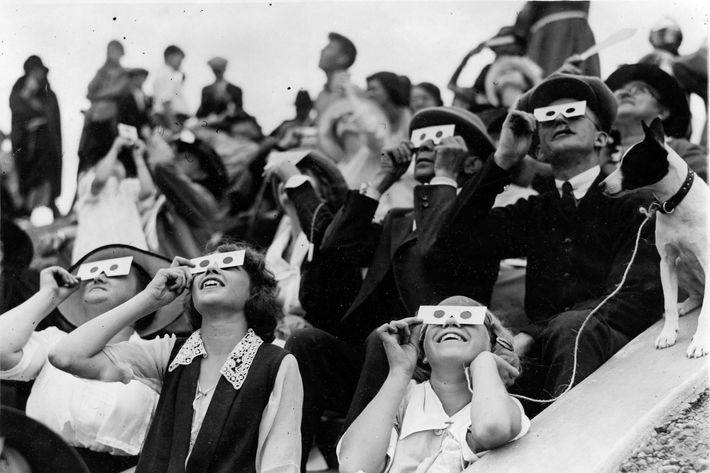
Was Anyone Else Worried They Were Accidentally Going to Look Directly at the Eclipse?

Was Anyone Else Worried They Were Accidentally Going to Look Directly at the Eclipse?

Don’t look at the eclipse, worried optometrists have been warning for weeks. It could cause serious, permanent eye damage, but you won’t even know it’s happening because you won’t feel it — our stupid retinas are apparently not equipped with pain receptors. And in some kind of horrifying twist out of a dark fairy tale, you won’t realize anything’s wrong until you wake up tomorrow morning. So: Don’t look at it! Not even a peek!

You know that, I know that, and yet: I was very worried during the eclipse this afternoon that I was going to accidentally look at it, anyway. It’s like the fear you sometimes get when you’re on top of some high ledge, and you get the urge to jump. You know? I know some of you know, and that’s some comfort, but not much, in part because the feeling doesn’t make a lot of sense: If I was so focused on not looking — then why did it also feel like I wouldn’t be able to resist doing so?

If the urge to look is like the urge to jump, and I think it might be, then a 2012 paper in the Journal of Affective Disorders about the so-called “high place phenomenon” may help explain it. Would you be surprised to learn, first of all, that this feeling is more common among people who tend to be a tiny bit anxious? But the researchers’ theory also goes beyond that. For one, there is some evidence to suggest that people with high anxiety sensitivity also may be unusually sensitive to interoceptive cues — that is, physiological signals, and perhaps especially those associated with anxiety, like a pounding heart. But just because anxious people are more sensitive to these cues doesn’t mean they’re necessarily interpreting them accurately.

The trick is in the interpretation of that process. “As the person tries to quickly rationalize what just happened, they arrive at a conclusion: They jerked away from the roof’s edge because they must have wanted to jump,” science writer Ed Cara explained in 2016. “Soon enough, this thought, which didn’t actually exist beforehand, revises their perception of the situation.” You’re accurately picking up on the somatic process that is keeping you from jumping, but you’re also misunderstanding it as proof that you have an unconscious urge to jump.

It’s just a theory, one involving a study of only a few hundred college kids, so this is not a definitive explanation for the urge to jump. Still, maybe the same applies to the urge to look: It could be that those of us who felt this way were so afraid of accidentally looking that we misinterpreted that fear as confirmation that we really, secretly, wanted to look and fry our eyeballs. But in the end, reader, I didn’t look. I don’t think. I guess we’ll know for sure tomorrow morning.

By Melissa Dahl

https://www.thecut.com/2017/08/worrying-about-accidentally-looking-at-the-eclipse.html

‘Magic 6 hours’ could dramatically improve your relationship

 When John Gottman talks, I listen.

Actually I’ve never heard him talk, but when he writes, I read.

So when a newly revised edition of his best-selling “The Seven Principles for Making Marriage Work” (Harmony Books) hit my desk this week, I cracked it open immediately.

Gottman is a psychology professor at the University of Washington and the founder/director of The Gottman Institute, a marital research and counseling center in Seattle.

Maybe you’ve read about his theory on “master couples” versus “disaster couples.”

Co-authored with Nan Silver, “Seven Principles,” which has sold a million-plus copies, was first released in 1999 — before Tinder, before Facebook — heck, before some of us even had cellphones.

The updated version (out next week) offers tips for dealing with digital distractions, including Gottman’s suggestion to agree on rules of tech etiquette: How much are you comfortable with your partner sharing on social media? When is texting/posting off-limits (mealtimes, date nights)? Do you create cyber-free zones in your home?

Most compelling of all, though, is Gottman’s “magic six hours” theory, based on interviews with couples who attended marital workshops at The Gottman Institute.

“We wondered what would distinguish those couples whose marriages continued to improve from those whose marriages did not,” Gottman writes. “To our surprise, we discovered that they were devoting only an extra six hours a week to their marriage.”

If your first thought is, “Only? Where am I going to find an extra six hours in my week?” — I hear you.

If that was not your first thought, forget I said anything.

Anyway, back to the winning formula.

Couples who saw their relationships improve devoted extra time each week to six categories.

First up: Partings

“Make sure that before you say goodbye in the morning you’ve learned about one thing that is happening in your spouse’s life that day,” Gottman writes. “From lunch with the boss to a doctor’s appointment to a scheduled phone call with an old friend.”

(Two minutes per day for five days, for a grand total of 10 minutes per week.)

Second: Reunions

Gottman recommends greeting your partner each day with a hug and kiss that last at least six seconds and ending each workday with stress-reducing conversation that lasts at least 20 minutes. (About 1 hour and 40 minutes per week.)

Third: Admiration and appreciation

Spend five minutes every day finding a new way to communicate genuine appreciation for your spouse, he says. (35 minutes per week.)

Fourth: Affection

“Show each other physical affection when you’re together during the day, and make sure to always embrace before going to sleep,” he writes. (Five minutes per day, seven days a week: 35 minutes.)

Fifth: Weekly date

For two hours once a week, Gottman recommends one-on-one time, during which you ask each other open-ended questions. “Think of questions to ask your spouse, like, ‘Are you still thinking about redecorating the bedroom?’ ‘Where should we take our next vacation?’ or ‘How are you feeling about your boss these days?'” (2 hours per week.)

Sixth: State of the union meeting

Spend one hour a week talking about what went right that week, discussing what went wrong and expressing appreciation for each other. “End by each of you asking and answering, ‘What can I do to make you feel loved this coming week?'” he writes. (1 hour per week.)

All of it adds up to six hours per week.

Some of these suggestions sound a tad awkward. “What can I do to make you feel loved this coming week?” reminds me a little too much of the last time I bought a car. (“What can I do to earn your business today?”)

But I like to think of marital advice like the food pyramid: You’re not going to adhere to it every day, but it’s an instructive guide to shape your habits around.

http://www.chicagotribune.com/lifestyles/ct-improve-relationship-in-six-hours-balancing-20150430-column.html