
Understanding What Therapy Isn’t
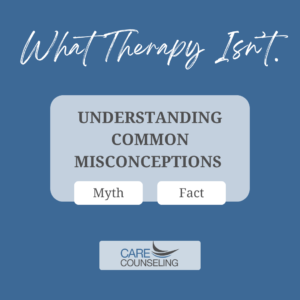 Therapy is a valuable and effective tool for improving mental and emotional well-being, yet it often carries with it a cloud of misconceptions and misunderstandings. These misconceptions can create barriers to seeking help and hinder the progress of those who do. In this blog, we’ll explore common misconceptions about therapy, helping you gain a better understanding of what therapy isn’t.
Misconception 1: Therapy Is Only for “Crazy” or Severely Mentally Ill Individuals
One of the most persistent misconceptions about therapy is that it’s exclusively for individuals who are “crazy” or severely mentally ill. This stereotype is not only stigmatizing but also entirely inaccurate. Therapy is a tool for anyone seeking support, personal growth, or better mental and emotional well-being.
What Therapy Isn’t:
Therapy is not solely for individuals with severe mental illnesses. It’s a resource for anyone facing life challenges, seeking self-improvement, or wanting a safe space to process their thoughts and feelings.
Misconception 2: Therapists Have All the Answers and Will Tell You What to Do
Another common misconception is that therapists are like all-knowing experts who will provide you with all the answers to your problems and dictate your life decisions. In reality, therapy is a collaborative process where therapists help you explore your thoughts and feelings, empowering you to make informed choices.
What Therapy Isn’t:
Therapy is not about therapists telling you what to do. Instead, it’s a guided journey where you and your therapist work together to uncover insights and develop strategies for personal growth and well-being.
Misconception 3: Therapy Is Only for Extreme Crisis Situations
Some believe that therapy is only necessary during extreme crisis situations, such as a major life trauma or emotional breakdown. While therapy can be incredibly beneficial during crises, it is not limited to such moments. Therapy is equally valuable for managing everyday stress, improving relationships, and enhancing overall mental health.
What Therapy Isn’t:
Therapy is not exclusively for extreme crises; it is a valuable resource for addressing a wide range of challenges, big and small, and for personal growth and self-improvement.
Misconception 4: You Should Keep Your Emotions and Problems to Yourself
Another misconception is that it’s better to keep your emotions and problems to yourself, as sharing them with a therapist is a sign of weakness. In reality, opening up and seeking support is a courageous and healthy step towards better mental and emotional well-being.
What Therapy Isn’t:
Therapy is not a sign of weakness; it is a proactive choice to address and work through challenges in a safe and supportive environment.
Misconception 5: Therapy Is a Quick Fix
Therapy is not a magic solution that provides instant results. It’s a process that requires time, effort, and commitment. While some individuals may experience positive changes relatively quickly, for many, therapy is an ongoing journey of self-discovery and personal growth.
What Therapy Isn’t:
Therapy is not a quick fix for all your problems. It’s a process that requires patience and active participation in your own healing and growth.
Misconception 6: You Must Talk About Traumatic Experiences Right Away
Some people believe that therapy will immediately delve into their most traumatic experiences, causing distress. While addressing past traumas may be a part of therapy for some individuals, therapists prioritize their clients’ comfort and readiness, gradually addressing sensitive topics when it is appropriate and beneficial.
What Therapy Isn’t:
Therapy does not force individuals to confront traumatic experiences before they are ready. Therapists work at their clients’ pace, ensuring their emotional well-being throughout the process.
Misconception 7: Therapy Is All About Venting or Complaining
While sharing your feelings and concerns is an essential aspect of therapy, it is not merely about venting or complaining. Therapy involves constructive discussions and exercises that help you gain insight, develop coping strategies, and work towards solutions.
What Therapy Isn’t:
Therapy is not a platform solely for venting; it’s a structured and purposeful process aimed at personal growth, problem-solving, and emotional healing.
Misconception 8: You Should Only See a Therapist When You’re in Crisis
Waiting until you’re in a state of crisis to seek therapy is a common misconception. In reality, therapy can be more effective when used proactively to develop coping skills, enhance self-awareness, and prevent crises from occurring.
What Therapy Isn’t:
Therapy is not only for crisis management; it can also serve as a proactive tool for maintaining good mental and emotional health.
Understanding what therapy isn’t is just as important as knowing what it is. Therapy is a collaborative and empowering journey towards better mental and emotional well-being, accessible to anyone seeking personal growth, support, and a safe space to explore their inner world.
 https://care-clinics.com/wp-content/uploads/2026/03/Untitled-4-1.png
500
500
Marketing
https://care-clinics.com/wp-content/uploads/2022/10/CAREcounseling_logo-300x138.png
Marketing2026-06-29 09:00:142026-03-19 11:15:25What does it mean to be nonbinary?
https://care-clinics.com/wp-content/uploads/2026/03/Untitled-4-1.png
500
500
Marketing
https://care-clinics.com/wp-content/uploads/2022/10/CAREcounseling_logo-300x138.png
Marketing2026-06-29 09:00:142026-03-19 11:15:25What does it mean to be nonbinary? https://care-clinics.com/wp-content/uploads/2026/03/Untitled-7.png
500
500
Marketing
https://care-clinics.com/wp-content/uploads/2022/10/CAREcounseling_logo-300x138.png
Marketing2026-06-15 09:00:302026-03-19 11:03:31What ADHD can look like at work
https://care-clinics.com/wp-content/uploads/2026/03/Untitled-7.png
500
500
Marketing
https://care-clinics.com/wp-content/uploads/2022/10/CAREcounseling_logo-300x138.png
Marketing2026-06-15 09:00:302026-03-19 11:03:31What ADHD can look like at work https://care-clinics.com/wp-content/uploads/2026/03/Untitled-6.png
500
500
Marketing
https://care-clinics.com/wp-content/uploads/2022/10/CAREcounseling_logo-300x138.png
Marketing2026-06-08 09:00:352026-03-19 10:57:49Turning difficult conversations into thoughtful discussions
https://care-clinics.com/wp-content/uploads/2026/03/Untitled-6.png
500
500
Marketing
https://care-clinics.com/wp-content/uploads/2022/10/CAREcounseling_logo-300x138.png
Marketing2026-06-08 09:00:352026-03-19 10:57:49Turning difficult conversations into thoughtful discussions https://care-clinics.com/wp-content/uploads/2026/03/Untitled-4.png
500
500
Marketing
https://care-clinics.com/wp-content/uploads/2022/10/CAREcounseling_logo-300x138.png
Marketing2026-05-11 09:00:232026-03-19 10:47:32Comparing types of therapy
https://care-clinics.com/wp-content/uploads/2026/03/Untitled-4.png
500
500
Marketing
https://care-clinics.com/wp-content/uploads/2022/10/CAREcounseling_logo-300x138.png
Marketing2026-05-11 09:00:232026-03-19 10:47:32Comparing types of therapy https://care-clinics.com/wp-content/uploads/2026/03/Untitled-3.png
500
500
Marketing
https://care-clinics.com/wp-content/uploads/2022/10/CAREcounseling_logo-300x138.png
Marketing2026-04-27 09:00:442026-03-19 10:39:03Flight anxiety: 5 essential coping skills
https://care-clinics.com/wp-content/uploads/2026/03/Untitled-3.png
500
500
Marketing
https://care-clinics.com/wp-content/uploads/2022/10/CAREcounseling_logo-300x138.png
Marketing2026-04-27 09:00:442026-03-19 10:39:03Flight anxiety: 5 essential coping skills https://care-clinics.com/wp-content/uploads/2026/03/Untitled-2.png
500
500
Marketing
https://care-clinics.com/wp-content/uploads/2022/10/CAREcounseling_logo-300x138.png
Marketing2026-04-24 09:00:152026-03-19 10:34:066 coping strategies for social anxiety: From overwhelmed to empowered
https://care-clinics.com/wp-content/uploads/2026/03/Untitled-2.png
500
500
Marketing
https://care-clinics.com/wp-content/uploads/2022/10/CAREcounseling_logo-300x138.png
Marketing2026-04-24 09:00:152026-03-19 10:34:066 coping strategies for social anxiety: From overwhelmed to empowered https://care-clinics.com/wp-content/uploads/2026/03/Untitled-1.png
500
500
Marketing
https://care-clinics.com/wp-content/uploads/2022/10/CAREcounseling_logo-300x138.png
Marketing2026-04-06 09:00:232026-03-19 10:26:08What a panic attack may feel like – and how to help
https://care-clinics.com/wp-content/uploads/2026/03/Untitled-1.png
500
500
Marketing
https://care-clinics.com/wp-content/uploads/2022/10/CAREcounseling_logo-300x138.png
Marketing2026-04-06 09:00:232026-03-19 10:26:08What a panic attack may feel like – and how to help https://care-clinics.com/wp-content/uploads/2026/01/6.png
500
500
Marketing
https://care-clinics.com/wp-content/uploads/2022/10/CAREcounseling_logo-300x138.png
Marketing2026-03-08 08:00:342026-01-15 11:00:12Recognizing International Women’s Day
https://care-clinics.com/wp-content/uploads/2026/01/6.png
500
500
Marketing
https://care-clinics.com/wp-content/uploads/2022/10/CAREcounseling_logo-300x138.png
Marketing2026-03-08 08:00:342026-01-15 11:00:12Recognizing International Women’s Day https://care-clinics.com/wp-content/uploads/2026/01/5.png
500
500
Marketing
https://care-clinics.com/wp-content/uploads/2022/10/CAREcounseling_logo-300x138.png
Marketing2026-03-02 08:00:182026-01-15 10:46:58Raising awareness for womens mental health
https://care-clinics.com/wp-content/uploads/2026/01/5.png
500
500
Marketing
https://care-clinics.com/wp-content/uploads/2022/10/CAREcounseling_logo-300x138.png
Marketing2026-03-02 08:00:182026-01-15 10:46:58Raising awareness for womens mental health https://care-clinics.com/wp-content/uploads/2026/01/4.png
500
500
Marketing
https://care-clinics.com/wp-content/uploads/2022/10/CAREcounseling_logo-300x138.png
Marketing2026-02-23 08:00:142026-01-15 10:40:00Foods that can help support mental well-being
https://care-clinics.com/wp-content/uploads/2026/01/4.png
500
500
Marketing
https://care-clinics.com/wp-content/uploads/2022/10/CAREcounseling_logo-300x138.png
Marketing2026-02-23 08:00:142026-01-15 10:40:00Foods that can help support mental well-being https://care-clinics.com/wp-content/uploads/2026/01/3.png
500
500
Marketing
https://care-clinics.com/wp-content/uploads/2022/10/CAREcounseling_logo-300x138.png
Marketing2026-02-02 08:00:212026-01-15 10:22:42The importance of gut health — and why it matters for more than digestion
https://care-clinics.com/wp-content/uploads/2026/01/3.png
500
500
Marketing
https://care-clinics.com/wp-content/uploads/2022/10/CAREcounseling_logo-300x138.png
Marketing2026-02-02 08:00:212026-01-15 10:22:42The importance of gut health — and why it matters for more than digestion https://care-clinics.com/wp-content/uploads/2026/01/2.png
500
500
Marketing
https://care-clinics.com/wp-content/uploads/2022/10/CAREcounseling_logo-300x138.png
Marketing2026-01-23 08:00:242026-01-15 10:15:42How does your body respond to stress?
https://care-clinics.com/wp-content/uploads/2026/01/2.png
500
500
Marketing
https://care-clinics.com/wp-content/uploads/2022/10/CAREcounseling_logo-300x138.png
Marketing2026-01-23 08:00:242026-01-15 10:15:42How does your body respond to stress? https://care-clinics.com/wp-content/uploads/2026/01/Untitled-1.png
500
500
Marketing
https://care-clinics.com/wp-content/uploads/2022/10/CAREcounseling_logo-300x138.png
Marketing2026-01-19 08:00:182026-01-15 10:10:17Want to set goals that actually stick? Try this instead!
https://care-clinics.com/wp-content/uploads/2026/01/Untitled-1.png
500
500
Marketing
https://care-clinics.com/wp-content/uploads/2022/10/CAREcounseling_logo-300x138.png
Marketing2026-01-19 08:00:182026-01-15 10:10:17Want to set goals that actually stick? Try this instead! https://care-clinics.com/wp-content/uploads/2025/09/Untitled-1-7.png
500
500
Marketing
https://care-clinics.com/wp-content/uploads/2022/10/CAREcounseling_logo-300x138.png
Marketing2025-12-29 08:00:092025-09-29 15:52:27New Year, Fresh Mindset
https://care-clinics.com/wp-content/uploads/2025/09/Untitled-1-7.png
500
500
Marketing
https://care-clinics.com/wp-content/uploads/2022/10/CAREcounseling_logo-300x138.png
Marketing2025-12-29 08:00:092025-09-29 15:52:27New Year, Fresh Mindset https://care-clinics.com/wp-content/uploads/2025/09/Untitled-1-6.png
500
500
Marketing
https://care-clinics.com/wp-content/uploads/2022/10/CAREcounseling_logo-300x138.png
Marketing2025-12-08 08:00:432025-09-29 15:49:40Reflect and Reset: How to Process the Past 12 Months and Prepare for the Next
https://care-clinics.com/wp-content/uploads/2025/09/Untitled-1-6.png
500
500
Marketing
https://care-clinics.com/wp-content/uploads/2022/10/CAREcounseling_logo-300x138.png
Marketing2025-12-08 08:00:432025-09-29 15:49:40Reflect and Reset: How to Process the Past 12 Months and Prepare for the Next https://care-clinics.com/wp-content/uploads/2025/11/Untitled-1.png
500
500
Marketing
https://care-clinics.com/wp-content/uploads/2022/10/CAREcounseling_logo-300x138.png
Marketing2025-12-05 08:00:052025-09-29 15:47:16Making the Most of Your Wellbeing for Special Occasions
https://care-clinics.com/wp-content/uploads/2025/11/Untitled-1.png
500
500
Marketing
https://care-clinics.com/wp-content/uploads/2022/10/CAREcounseling_logo-300x138.png
Marketing2025-12-05 08:00:052025-09-29 15:47:16Making the Most of Your Wellbeing for Special Occasions https://care-clinics.com/wp-content/uploads/2025/09/Untitled-1-5.png
500
500
Marketing
https://care-clinics.com/wp-content/uploads/2022/10/CAREcounseling_logo-300x138.png
Marketing2025-11-29 08:00:322025-09-29 15:42:19Healthy Coping with Change
https://care-clinics.com/wp-content/uploads/2025/09/Untitled-1-5.png
500
500
Marketing
https://care-clinics.com/wp-content/uploads/2022/10/CAREcounseling_logo-300x138.png
Marketing2025-11-29 08:00:322025-09-29 15:42:19Healthy Coping with Change https://care-clinics.com/wp-content/uploads/2025/09/Untitled-1-4.png
500
500
Marketing
https://care-clinics.com/wp-content/uploads/2022/10/CAREcounseling_logo-300x138.png
Marketing2025-11-21 08:00:062025-09-29 15:35:46Are You Sober Curious?
https://care-clinics.com/wp-content/uploads/2025/09/Untitled-1-4.png
500
500
Marketing
https://care-clinics.com/wp-content/uploads/2022/10/CAREcounseling_logo-300x138.png
Marketing2025-11-21 08:00:062025-09-29 15:35:46Are You Sober Curious? https://care-clinics.com/wp-content/uploads/2025/09/Untitled-1-3.png
500
500
Marketing
https://care-clinics.com/wp-content/uploads/2022/10/CAREcounseling_logo-300x138.png
Marketing2025-11-10 08:00:232025-09-29 15:29:37Managing the Symptoms of Depression
https://care-clinics.com/wp-content/uploads/2025/09/Untitled-1-3.png
500
500
Marketing
https://care-clinics.com/wp-content/uploads/2022/10/CAREcounseling_logo-300x138.png
Marketing2025-11-10 08:00:232025-09-29 15:29:37Managing the Symptoms of Depression https://care-clinics.com/wp-content/uploads/2025/09/Untitled-1-2.png
500
500
Marketing
https://care-clinics.com/wp-content/uploads/2022/10/CAREcounseling_logo-300x138.png
Marketing2025-10-31 08:00:002025-09-29 15:24:52Wintertime Depression
https://care-clinics.com/wp-content/uploads/2025/09/Untitled-1-2.png
500
500
Marketing
https://care-clinics.com/wp-content/uploads/2022/10/CAREcounseling_logo-300x138.png
Marketing2025-10-31 08:00:002025-09-29 15:24:52Wintertime Depression https://care-clinics.com/wp-content/uploads/2025/09/Untitled-1-1.png
500
500
Marketing
https://care-clinics.com/wp-content/uploads/2022/10/CAREcounseling_logo-300x138.png
Marketing2025-10-20 08:00:162025-09-29 15:18:21A Quick Guide to Mindful Living
https://care-clinics.com/wp-content/uploads/2025/09/Untitled-1-1.png
500
500
Marketing
https://care-clinics.com/wp-content/uploads/2022/10/CAREcounseling_logo-300x138.png
Marketing2025-10-20 08:00:162025-09-29 15:18:21A Quick Guide to Mindful Living https://care-clinics.com/wp-content/uploads/2025/09/Untitled-1.png
500
500
Marketing
https://care-clinics.com/wp-content/uploads/2022/10/CAREcounseling_logo-300x138.png
Marketing2025-10-13 08:00:352025-09-29 15:13:50Achieving Goals Step by Step
https://care-clinics.com/wp-content/uploads/2025/09/Untitled-1.png
500
500
Marketing
https://care-clinics.com/wp-content/uploads/2022/10/CAREcounseling_logo-300x138.png
Marketing2025-10-13 08:00:352025-09-29 15:13:50Achieving Goals Step by Step https://care-clinics.com/wp-content/uploads/2025/07/meditation.jpg
500
500
Marketing
https://care-clinics.com/wp-content/uploads/2022/10/CAREcounseling_logo-300x138.png
Marketing2025-09-29 08:00:042025-07-15 11:47:54Meditation for Anxiety: A Beginner’s Guide
https://care-clinics.com/wp-content/uploads/2025/07/meditation.jpg
500
500
Marketing
https://care-clinics.com/wp-content/uploads/2022/10/CAREcounseling_logo-300x138.png
Marketing2025-09-29 08:00:042025-07-15 11:47:54Meditation for Anxiety: A Beginner’s Guide https://care-clinics.com/wp-content/uploads/2025/07/recoverysupport.jpg
500
500
Marketing
https://care-clinics.com/wp-content/uploads/2022/10/CAREcounseling_logo-300x138.png
Marketing2025-09-12 08:00:322025-07-15 11:42:09How to Create a Recovery Support Network
https://care-clinics.com/wp-content/uploads/2025/07/recoverysupport.jpg
500
500
Marketing
https://care-clinics.com/wp-content/uploads/2022/10/CAREcounseling_logo-300x138.png
Marketing2025-09-12 08:00:322025-07-15 11:42:09How to Create a Recovery Support Network