
I Don’t Think About My Mental Health
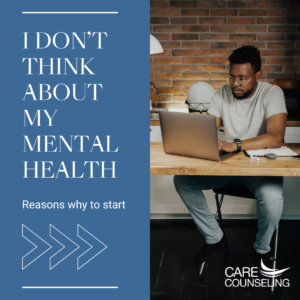 Most people I know who either avoid thinking about mental health or just do not spend time reflecting on emotional well-being are experiencing similar challenges as those who are actively working towards taking good care of their mental health.
If you are someone who does not think about your mental health, here are some questions to ask yourself:
Do you have a consistent and healthy routine for sleep, nutrition, and exercise?
- These are considered the pillars of mental health and are also essential for physical health. Sleep, nutrition, and exercise are interconnected. Improving one area can make a difference and improving all three can have a significant impact on mental health and the ability to live longer, more fulfilling lives.
Sleep Recommendations: The National Sleep Foundation: https://www.thensf.org/
Nutrition & Physical Activity Recommendations: Office for Disease Prevention and Health Promotions https://health.gov/our-work/nutrition-physical-activity/dietary-guidelines
Do you tend to cope with stress by escaping from your thoughts and feelings?
- While there are enjoyable activities that help numb and distract the mind (e.g., having a drink, eating, shopping, having sex, watching TV, scrolling social media, and playing video games) they may become time-consuming, lead to negative consequences, and begin to control your life. There are support group options for areas that have become problematic including the following:
Gaming Addicts Anonymous: https://www.gamingaddictsanonymous.org/
Substance Use Recovery: https://www.recoveryanswers.org/resource/peer-based-recovery-support
Eating Disorders: https://www.nationaleatingdisorders.org/help-support/contact-helpline
Sex Addicts Anonymous: https://saa-recovery.org/
Substance Use and Mental Health Services Administration: https://www.samhsa.gov/find-help/national-helpline
Have others in your life expressed concern about your mental health or suggested giving therapy a try?
- Your friends and loved ones may be the first to notice changes in your behavior such as irritability and anger in response to stressors. They may be the first to know that you are withdrawing from relationships or struggling to function in other important areas in life.
When was the last time you had a mental health screening? Approximately 75% of lifelong mental health conditions begin by age 24; the average delay of onset of symptoms and interventions is 11 years. Improving health begins with mental health screening.
Getting routine mental health screening is important to assess emerging concerns and actively address concerns that are impacting your relationships, work/ school, or other important areas. More than half of all Americans will experience a mental health disorder at some point. Just like medical conditions, the symptoms will vary from mild to severe and the appropriate diagnosis and recommendations will be important for effective treatment. Problems will not go away with avoidance, although it may serve as a temporary relief for anxiety-provoking situations.
It can be easier to avoid thinking about mental health because then there is no need to make any changes. Addressing the root causes of mental health can also be scary but can also be potentially life-saving. Therapy is hard work, but the benefits are worth it.
Written By: Charlotte Johnson, MA, LPCC
 https://care-clinics.com/wp-content/uploads/2026/03/Untitled-4-1.png
500
500
Marketing
https://care-clinics.com/wp-content/uploads/2022/10/CAREcounseling_logo-300x138.png
Marketing2026-06-29 09:00:142026-03-19 11:15:25What does it mean to be nonbinary?
https://care-clinics.com/wp-content/uploads/2026/03/Untitled-4-1.png
500
500
Marketing
https://care-clinics.com/wp-content/uploads/2022/10/CAREcounseling_logo-300x138.png
Marketing2026-06-29 09:00:142026-03-19 11:15:25What does it mean to be nonbinary? https://care-clinics.com/wp-content/uploads/2026/03/Untitled-7.png
500
500
Marketing
https://care-clinics.com/wp-content/uploads/2022/10/CAREcounseling_logo-300x138.png
Marketing2026-06-15 09:00:302026-03-19 11:03:31What ADHD can look like at work
https://care-clinics.com/wp-content/uploads/2026/03/Untitled-7.png
500
500
Marketing
https://care-clinics.com/wp-content/uploads/2022/10/CAREcounseling_logo-300x138.png
Marketing2026-06-15 09:00:302026-03-19 11:03:31What ADHD can look like at work https://care-clinics.com/wp-content/uploads/2026/03/Untitled-6.png
500
500
Marketing
https://care-clinics.com/wp-content/uploads/2022/10/CAREcounseling_logo-300x138.png
Marketing2026-06-08 09:00:352026-03-19 10:57:49Turning difficult conversations into thoughtful discussions
https://care-clinics.com/wp-content/uploads/2026/03/Untitled-6.png
500
500
Marketing
https://care-clinics.com/wp-content/uploads/2022/10/CAREcounseling_logo-300x138.png
Marketing2026-06-08 09:00:352026-03-19 10:57:49Turning difficult conversations into thoughtful discussions https://care-clinics.com/wp-content/uploads/2026/03/Untitled-4.png
500
500
Marketing
https://care-clinics.com/wp-content/uploads/2022/10/CAREcounseling_logo-300x138.png
Marketing2026-05-11 09:00:232026-03-19 10:47:32Comparing types of therapy
https://care-clinics.com/wp-content/uploads/2026/03/Untitled-4.png
500
500
Marketing
https://care-clinics.com/wp-content/uploads/2022/10/CAREcounseling_logo-300x138.png
Marketing2026-05-11 09:00:232026-03-19 10:47:32Comparing types of therapy https://care-clinics.com/wp-content/uploads/2026/03/Untitled-3.png
500
500
Marketing
https://care-clinics.com/wp-content/uploads/2022/10/CAREcounseling_logo-300x138.png
Marketing2026-04-27 09:00:442026-03-19 10:39:03Flight anxiety: 5 essential coping skills
https://care-clinics.com/wp-content/uploads/2026/03/Untitled-3.png
500
500
Marketing
https://care-clinics.com/wp-content/uploads/2022/10/CAREcounseling_logo-300x138.png
Marketing2026-04-27 09:00:442026-03-19 10:39:03Flight anxiety: 5 essential coping skills https://care-clinics.com/wp-content/uploads/2026/03/Untitled-2.png
500
500
Marketing
https://care-clinics.com/wp-content/uploads/2022/10/CAREcounseling_logo-300x138.png
Marketing2026-04-24 09:00:152026-03-19 10:34:066 coping strategies for social anxiety: From overwhelmed to empowered
https://care-clinics.com/wp-content/uploads/2026/03/Untitled-2.png
500
500
Marketing
https://care-clinics.com/wp-content/uploads/2022/10/CAREcounseling_logo-300x138.png
Marketing2026-04-24 09:00:152026-03-19 10:34:066 coping strategies for social anxiety: From overwhelmed to empowered https://care-clinics.com/wp-content/uploads/2026/03/Untitled-1.png
500
500
Marketing
https://care-clinics.com/wp-content/uploads/2022/10/CAREcounseling_logo-300x138.png
Marketing2026-04-06 09:00:232026-03-19 10:26:08What a panic attack may feel like – and how to help
https://care-clinics.com/wp-content/uploads/2026/03/Untitled-1.png
500
500
Marketing
https://care-clinics.com/wp-content/uploads/2022/10/CAREcounseling_logo-300x138.png
Marketing2026-04-06 09:00:232026-03-19 10:26:08What a panic attack may feel like – and how to help https://care-clinics.com/wp-content/uploads/2026/01/6.png
500
500
Marketing
https://care-clinics.com/wp-content/uploads/2022/10/CAREcounseling_logo-300x138.png
Marketing2026-03-08 08:00:342026-01-15 11:00:12Recognizing International Women’s Day
https://care-clinics.com/wp-content/uploads/2026/01/6.png
500
500
Marketing
https://care-clinics.com/wp-content/uploads/2022/10/CAREcounseling_logo-300x138.png
Marketing2026-03-08 08:00:342026-01-15 11:00:12Recognizing International Women’s Day https://care-clinics.com/wp-content/uploads/2026/01/5.png
500
500
Marketing
https://care-clinics.com/wp-content/uploads/2022/10/CAREcounseling_logo-300x138.png
Marketing2026-03-02 08:00:182026-01-15 10:46:58Raising awareness for womens mental health
https://care-clinics.com/wp-content/uploads/2026/01/5.png
500
500
Marketing
https://care-clinics.com/wp-content/uploads/2022/10/CAREcounseling_logo-300x138.png
Marketing2026-03-02 08:00:182026-01-15 10:46:58Raising awareness for womens mental health https://care-clinics.com/wp-content/uploads/2026/01/4.png
500
500
Marketing
https://care-clinics.com/wp-content/uploads/2022/10/CAREcounseling_logo-300x138.png
Marketing2026-02-23 08:00:142026-01-15 10:40:00Foods that can help support mental well-being
https://care-clinics.com/wp-content/uploads/2026/01/4.png
500
500
Marketing
https://care-clinics.com/wp-content/uploads/2022/10/CAREcounseling_logo-300x138.png
Marketing2026-02-23 08:00:142026-01-15 10:40:00Foods that can help support mental well-being https://care-clinics.com/wp-content/uploads/2026/01/3.png
500
500
Marketing
https://care-clinics.com/wp-content/uploads/2022/10/CAREcounseling_logo-300x138.png
Marketing2026-02-02 08:00:212026-01-15 10:22:42The importance of gut health — and why it matters for more than digestion
https://care-clinics.com/wp-content/uploads/2026/01/3.png
500
500
Marketing
https://care-clinics.com/wp-content/uploads/2022/10/CAREcounseling_logo-300x138.png
Marketing2026-02-02 08:00:212026-01-15 10:22:42The importance of gut health — and why it matters for more than digestion https://care-clinics.com/wp-content/uploads/2026/01/2.png
500
500
Marketing
https://care-clinics.com/wp-content/uploads/2022/10/CAREcounseling_logo-300x138.png
Marketing2026-01-23 08:00:242026-01-15 10:15:42How does your body respond to stress?
https://care-clinics.com/wp-content/uploads/2026/01/2.png
500
500
Marketing
https://care-clinics.com/wp-content/uploads/2022/10/CAREcounseling_logo-300x138.png
Marketing2026-01-23 08:00:242026-01-15 10:15:42How does your body respond to stress? https://care-clinics.com/wp-content/uploads/2026/01/Untitled-1.png
500
500
Marketing
https://care-clinics.com/wp-content/uploads/2022/10/CAREcounseling_logo-300x138.png
Marketing2026-01-19 08:00:182026-01-15 10:10:17Want to set goals that actually stick? Try this instead!
https://care-clinics.com/wp-content/uploads/2026/01/Untitled-1.png
500
500
Marketing
https://care-clinics.com/wp-content/uploads/2022/10/CAREcounseling_logo-300x138.png
Marketing2026-01-19 08:00:182026-01-15 10:10:17Want to set goals that actually stick? Try this instead! https://care-clinics.com/wp-content/uploads/2025/09/Untitled-1-7.png
500
500
Marketing
https://care-clinics.com/wp-content/uploads/2022/10/CAREcounseling_logo-300x138.png
Marketing2025-12-29 08:00:092025-09-29 15:52:27New Year, Fresh Mindset
https://care-clinics.com/wp-content/uploads/2025/09/Untitled-1-7.png
500
500
Marketing
https://care-clinics.com/wp-content/uploads/2022/10/CAREcounseling_logo-300x138.png
Marketing2025-12-29 08:00:092025-09-29 15:52:27New Year, Fresh Mindset https://care-clinics.com/wp-content/uploads/2025/09/Untitled-1-6.png
500
500
Marketing
https://care-clinics.com/wp-content/uploads/2022/10/CAREcounseling_logo-300x138.png
Marketing2025-12-08 08:00:432025-09-29 15:49:40Reflect and Reset: How to Process the Past 12 Months and Prepare for the Next
https://care-clinics.com/wp-content/uploads/2025/09/Untitled-1-6.png
500
500
Marketing
https://care-clinics.com/wp-content/uploads/2022/10/CAREcounseling_logo-300x138.png
Marketing2025-12-08 08:00:432025-09-29 15:49:40Reflect and Reset: How to Process the Past 12 Months and Prepare for the Next https://care-clinics.com/wp-content/uploads/2025/11/Untitled-1.png
500
500
Marketing
https://care-clinics.com/wp-content/uploads/2022/10/CAREcounseling_logo-300x138.png
Marketing2025-12-05 08:00:052025-09-29 15:47:16Making the Most of Your Wellbeing for Special Occasions
https://care-clinics.com/wp-content/uploads/2025/11/Untitled-1.png
500
500
Marketing
https://care-clinics.com/wp-content/uploads/2022/10/CAREcounseling_logo-300x138.png
Marketing2025-12-05 08:00:052025-09-29 15:47:16Making the Most of Your Wellbeing for Special Occasions https://care-clinics.com/wp-content/uploads/2025/09/Untitled-1-5.png
500
500
Marketing
https://care-clinics.com/wp-content/uploads/2022/10/CAREcounseling_logo-300x138.png
Marketing2025-11-29 08:00:322025-09-29 15:42:19Healthy Coping with Change
https://care-clinics.com/wp-content/uploads/2025/09/Untitled-1-5.png
500
500
Marketing
https://care-clinics.com/wp-content/uploads/2022/10/CAREcounseling_logo-300x138.png
Marketing2025-11-29 08:00:322025-09-29 15:42:19Healthy Coping with Change https://care-clinics.com/wp-content/uploads/2025/09/Untitled-1-4.png
500
500
Marketing
https://care-clinics.com/wp-content/uploads/2022/10/CAREcounseling_logo-300x138.png
Marketing2025-11-21 08:00:062025-09-29 15:35:46Are You Sober Curious?
https://care-clinics.com/wp-content/uploads/2025/09/Untitled-1-4.png
500
500
Marketing
https://care-clinics.com/wp-content/uploads/2022/10/CAREcounseling_logo-300x138.png
Marketing2025-11-21 08:00:062025-09-29 15:35:46Are You Sober Curious? https://care-clinics.com/wp-content/uploads/2025/09/Untitled-1-3.png
500
500
Marketing
https://care-clinics.com/wp-content/uploads/2022/10/CAREcounseling_logo-300x138.png
Marketing2025-11-10 08:00:232025-09-29 15:29:37Managing the Symptoms of Depression
https://care-clinics.com/wp-content/uploads/2025/09/Untitled-1-3.png
500
500
Marketing
https://care-clinics.com/wp-content/uploads/2022/10/CAREcounseling_logo-300x138.png
Marketing2025-11-10 08:00:232025-09-29 15:29:37Managing the Symptoms of Depression https://care-clinics.com/wp-content/uploads/2025/09/Untitled-1-2.png
500
500
Marketing
https://care-clinics.com/wp-content/uploads/2022/10/CAREcounseling_logo-300x138.png
Marketing2025-10-31 08:00:002025-09-29 15:24:52Wintertime Depression
https://care-clinics.com/wp-content/uploads/2025/09/Untitled-1-2.png
500
500
Marketing
https://care-clinics.com/wp-content/uploads/2022/10/CAREcounseling_logo-300x138.png
Marketing2025-10-31 08:00:002025-09-29 15:24:52Wintertime Depression https://care-clinics.com/wp-content/uploads/2025/09/Untitled-1-1.png
500
500
Marketing
https://care-clinics.com/wp-content/uploads/2022/10/CAREcounseling_logo-300x138.png
Marketing2025-10-20 08:00:162025-09-29 15:18:21A Quick Guide to Mindful Living
https://care-clinics.com/wp-content/uploads/2025/09/Untitled-1-1.png
500
500
Marketing
https://care-clinics.com/wp-content/uploads/2022/10/CAREcounseling_logo-300x138.png
Marketing2025-10-20 08:00:162025-09-29 15:18:21A Quick Guide to Mindful Living https://care-clinics.com/wp-content/uploads/2025/09/Untitled-1.png
500
500
Marketing
https://care-clinics.com/wp-content/uploads/2022/10/CAREcounseling_logo-300x138.png
Marketing2025-10-13 08:00:352025-09-29 15:13:50Achieving Goals Step by Step
https://care-clinics.com/wp-content/uploads/2025/09/Untitled-1.png
500
500
Marketing
https://care-clinics.com/wp-content/uploads/2022/10/CAREcounseling_logo-300x138.png
Marketing2025-10-13 08:00:352025-09-29 15:13:50Achieving Goals Step by Step https://care-clinics.com/wp-content/uploads/2025/07/meditation.jpg
500
500
Marketing
https://care-clinics.com/wp-content/uploads/2022/10/CAREcounseling_logo-300x138.png
Marketing2025-09-29 08:00:042025-07-15 11:47:54Meditation for Anxiety: A Beginner’s Guide
https://care-clinics.com/wp-content/uploads/2025/07/meditation.jpg
500
500
Marketing
https://care-clinics.com/wp-content/uploads/2022/10/CAREcounseling_logo-300x138.png
Marketing2025-09-29 08:00:042025-07-15 11:47:54Meditation for Anxiety: A Beginner’s Guide https://care-clinics.com/wp-content/uploads/2025/07/recoverysupport.jpg
500
500
Marketing
https://care-clinics.com/wp-content/uploads/2022/10/CAREcounseling_logo-300x138.png
Marketing2025-09-12 08:00:322025-07-15 11:42:09How to Create a Recovery Support Network
https://care-clinics.com/wp-content/uploads/2025/07/recoverysupport.jpg
500
500
Marketing
https://care-clinics.com/wp-content/uploads/2022/10/CAREcounseling_logo-300x138.png
Marketing2025-09-12 08:00:322025-07-15 11:42:09How to Create a Recovery Support Network